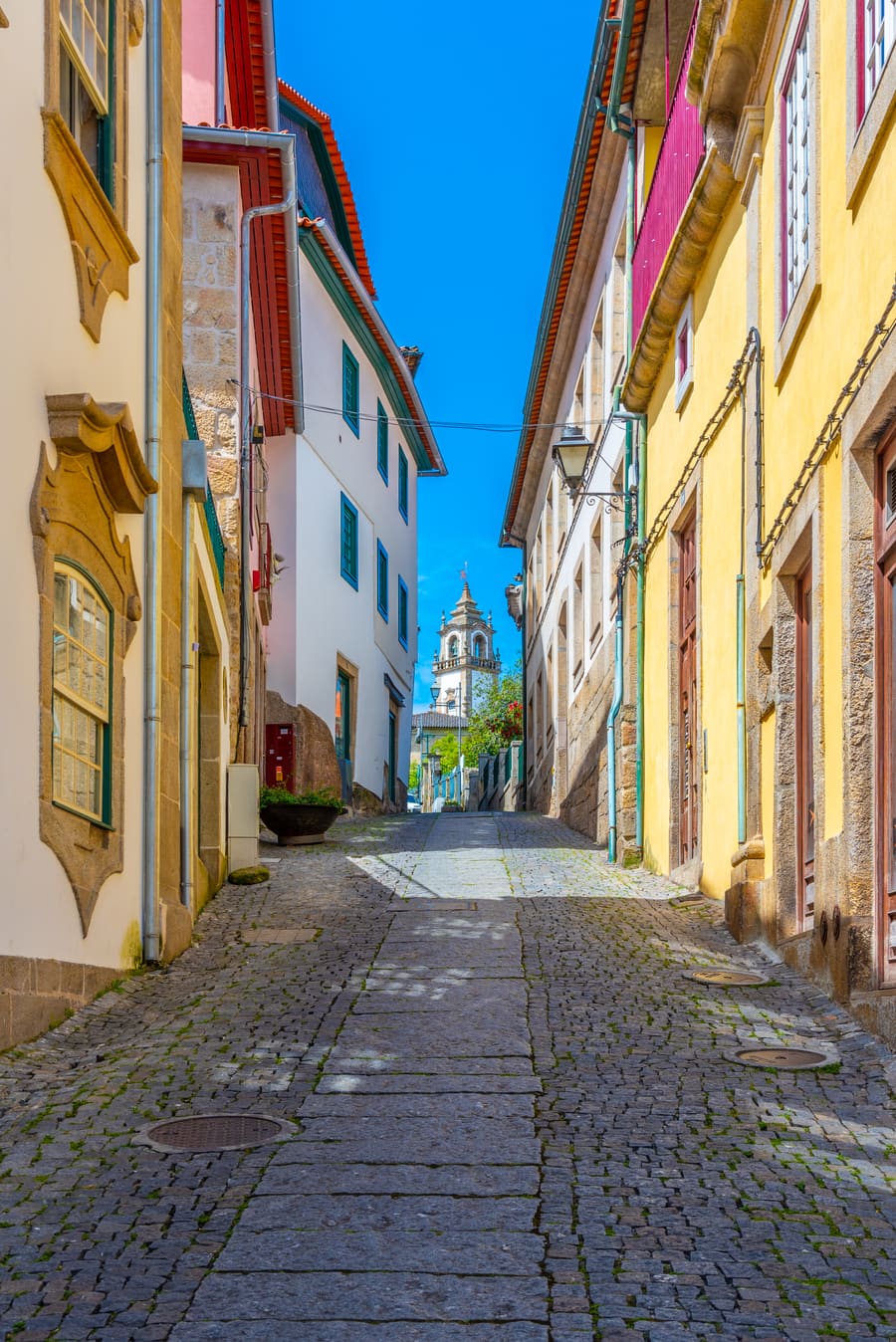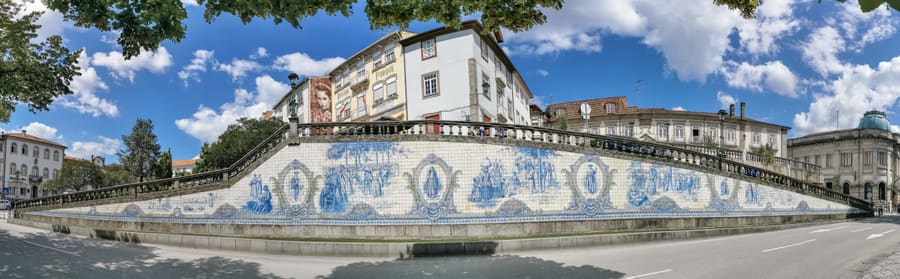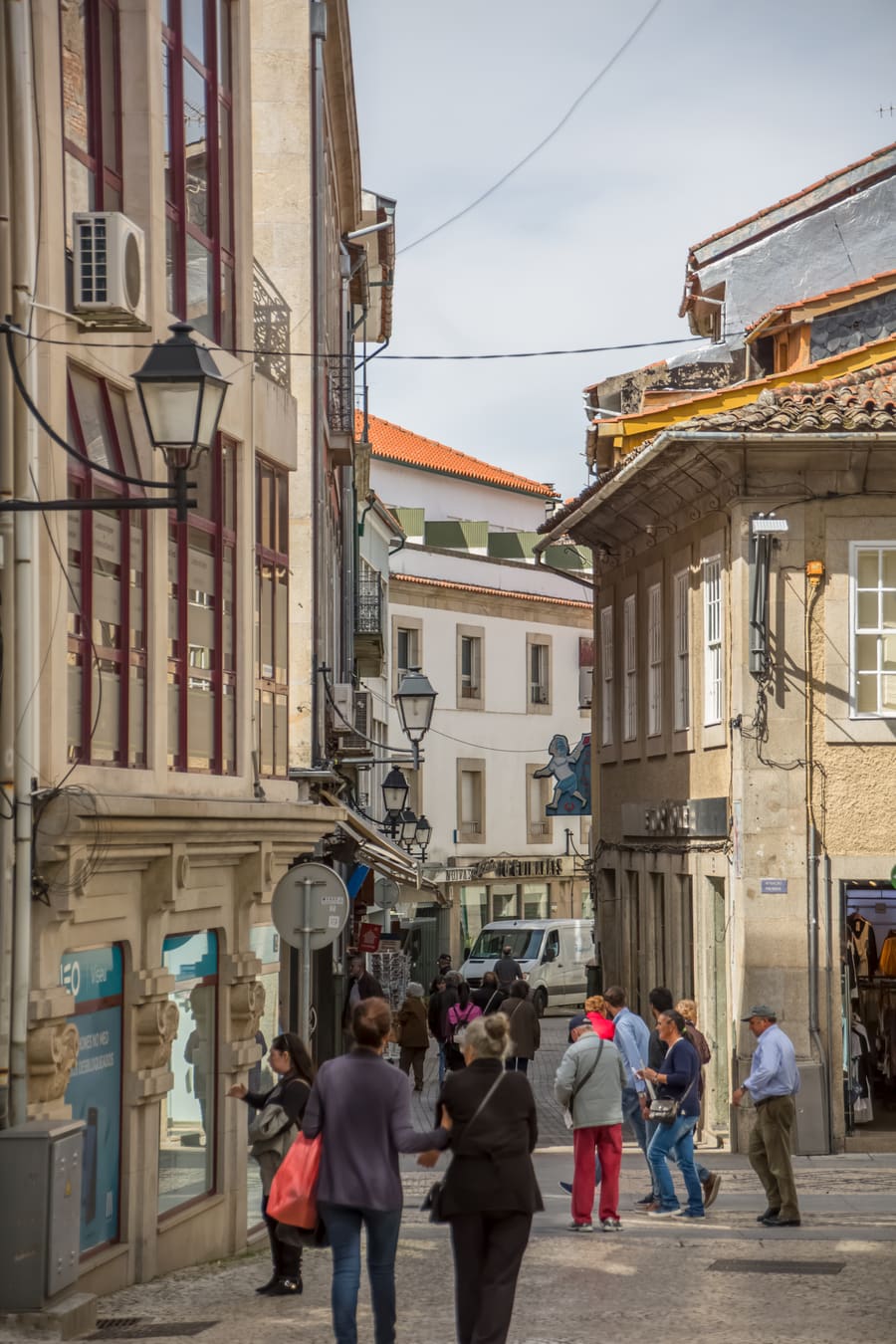
The region around Viseu is bigger than the city itself. Within an hour and a half’s drive lie villages that appear on no bestseller list — and that is exactly their appeal. No souvenir shops, no queues, no tour groups following a flag. Just granite, schist, and Portuguese people who still live in their villages.
These six were chosen because they complement each other: each has its own character, and together they give you a picture of the region no museum can.
At a glance: which village suits you?
| Village | Distance | Character | Best for |
|---|---|---|---|
| Santar | 20 km / 25 min | Wine & gardens | Wine lovers |
| Penalva do Castelo | 25 km / 30 min | Bravo de Esmolfe apples | Local food |
| Caramulo | 30 km / 35 min | Museum & mountain air | Culture + nature |
| Linhares da Beira | 65 km / 55 min | Medieval castle | History & walking |
| Trancoso | 80 km / 1h | Walled town | Medieval Portugal |
| Piódão | 95 km / 1h20 | Schist village | Photography & peace |
1. Santar — the wine-and-garden village
Strictly speaking, Santar isn’t hidden: wine lovers visiting Casa de Santar already drive through it. But the village itself — beyond the quinta — is something most visitors miss.
Santar is one of the best-preserved wine villages of the Dão, home to only a few hundred people. It’s a run of granite manor houses behind box hedges, with small private chapels attached to the walls — the feel of a 17th-century country-house enclave that time forgot.
What to do:
- Wander the village centre (20 minutes; everything is visible from the lanes)
- The walled garden of Casa de Santar, with box parterres and a small fountain
- A tasting at Casa de Santar
Practical:
- Santar, 20 km south of Viseu
- Always combine with lunch or a tasting — the village itself takes 30 minutes to walk
- Casa de Santar restaurant: €25–40 per person, booking recommended
2. Caramulo — an unexpected car museum at 800 metres
Caramulo is a mountain village of around 1,000 people in the Serra do Caramulo, at about 800 metres. Not remarkable in itself — except for what the Abel de Lacerda family opened here in 1959: one of Europe’s most surprising car and art museums, in the middle of nowhere.
Museu do Caramulo has two quite unexpected collections:
The car collection: dozens of historic vehicles from the dawn of motoring onwards, including rare Bugattis, Ferraris and pre-war Mercedes-Benz. Beautifully kept and still in working order.
The art collection: works by names including Picasso, Dalí and Grão Vasco (of the Viseu school) — in a mountain village of a thousand people.
After the museum, drive on to the Caramulinho viewpoint (1,075 metres). On a clear day you can see the coast near Aveiro on one side and the Serra da Estrela on the other.
Practical:
- 30 km west of Viseu via the IC12
- Opening hours: usually Tue–Sun, with a lunchtime break (check seasonal changes)
- Admission: around €6–8 per person (check current prices)
- Combine with a walk in the Serra do Caramulo; marked trails start from the village
3. Linhares da Beira — a castle on a rock above the Mondego
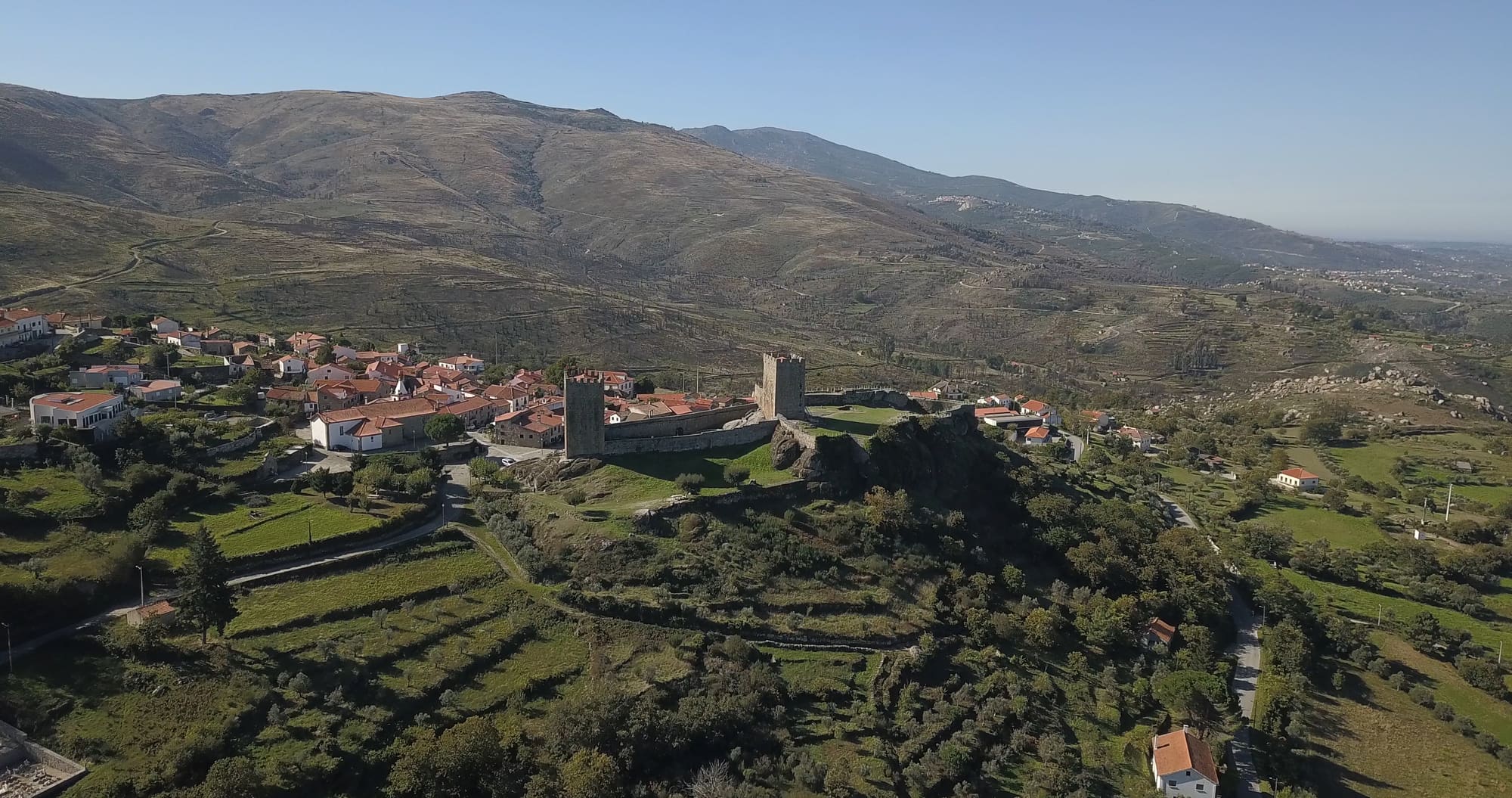
Linhares da Beira is one of the twelve Aldeias Históricas de Portugal (Historic Villages of Portugal). It sits on a ridge of the Serra da Estrela, on a granite outcrop that was fortified as early as the 12th century.
The castle dominates both the village and the valley below. From its towers you can see the whole Mondego valley — one of Central Portugal’s great unsung panoramas, and almost always without other visitors.
The village below has barely changed in centuries. Narrow cobbled lanes, granite houses with wooden shutters, a fountain still running on the square. There are a couple of local bars; food is whatever the day brings.
What to do:
- Climb the castle (free; take care on wet stone)
- Village walk from the castle down to the lower village (45 minutes)
- Combine with walking in the Serra da Estrela — waymarked trails start from the village
- Buy cheese locally (Queijo Serra da Estrela is made nearby)
Practical:
- 65 km south-east of Viseu via the A25 towards Celorico da Beira
- No charge for the village or the castle
- Little tourist infrastructure — bring a picnic unless you get lucky at the local bar
- Pairs well with a Serra da Estrela day: Manteigas is not far away
4. Trancoso — the walled town where time stood still
Trancoso is the only true walled town on this list. It sits on a plateau at about 880 metres, ringed by medieval walls that are largely intact. Inside: a castle, narrow alleys, whitewashed houses with Gothic and Manueline details, and hardly any tourism.
Its history is real: in 1282 King Dinis married Isabel of Aragon here — later venerated as Saint Isabel — a political match that briefly made Trancoso one of Portugal’s important towns. Trancoso was also home to one of the largest Jewish communities in the Beiras, whose traces can still be seen in the architecture of its narrow streets.
What to do:
- Walk along the town walls (about 2 km, 45 minutes)
- Castle: free during the day
- Look for the old Jewish quarter: in some doorways you can still spot the small recesses where a mezuzah was once fixed
- The town’s churches, small but richly detailed
Practical:
- 80 km north-east of Viseu via the A25 towards Guarda, then north
- Drive time about 1 hour
- Few places to eat in the centre; bring a picnic or try one of the local tascas
- Combine with Linhares da Beira on the same day (about 30–40 km apart)
5. Piódão — the schist village in the Açor mountains
Piódão is Portugal’s most photographed “undiscovered” village — a paradox it has made peace with. The photos don’t lie: a bowl in the Açor mountains filled with dark schist houses and a white church, linked by alleys no car can enter, with blue doors and window frames as the only splash of colour.
What the photos don’t show: Piódão is steeper than it looks. The village climbs a mountainside with barely a flat step. That’s the attraction: it was built where nobody would choose to build, and for centuries it was almost cut off. A proper road only arrived in the 1970s; before that Piódão was reached by mule.
What to do:
- Walk the village from bottom to top (45 minutes, unhurried)
- The parish church on the main square (usually open during the day)
- Try local pastries at the bar on the square
- The viewpoint on the approach road, a few kilometres before the village: the classic photo of Piódão in its bowl
- Walk or drive to Foz d’Égua: river, waterfall, stone bridges, peace
Practical:
- About 95 km south-west of Viseu; the last stretch is on narrow mountain roads
- Drive time about 1 hour 20 minutes — the final 15 km are narrow and winding, drive carefully
- No public transport; a car is the only option
- Parking: small car park at the village entrance (the village itself is car-free)
- Not suitable for wheelchairs, pushchairs or people with limited mobility
- Limited mobile signal — download maps offline in advance
- Best time: early morning (before 10:00) or late afternoon; summer middays are busier than you’d expect
6. Penalva do Castelo — home of the Bravo de Esmolfe apple
Penalva do Castelo has no dramatic landscape and no monumental castle. It’s a working farming town 25 km from Viseu, and it’s on this list for one reason: the Maçã Bravo de Esmolfe.
The Bravo de Esmolfe is an apple with protected designation of origin (DOP), grown only in a small area around the village of Esmolfe, part of Penalva do Castelo. It’s small, irregular, yellow-green with a pink blush — and has a flavour no supermarket apple can match: sweet-sharp, aromatic, crisp and juicy.
This is where you buy apples from the grower, not from a supermarket. In apple season (September–November), farmers sell their harvest at markets and by the roadside.
What to do:
- September–November: buy apples from local growers (ask in the village where — everyone knows)
- A drive through the surrounding orchards (September is the peak)
Practical:
- 25 km north-east of Viseu
- No opening hours or tickets — this is a farming town, not a museum
- Local café for a coffee and a torrada (toast); eat back in Viseu
Day-trip ideas
Option A: wine + apples (about 60 km)
Viseu → Santar (Dão tasting, lunch) → Penalva do Castelo (apples, scenic drive) → back to Viseu
Option B: museum + mountain (about 65 km)
Viseu → Caramulo (Museu do Caramulo, 2 hours) → Caramulinho viewpoint → walk → back to Viseu
Option C: castles & walled towns (about 160 km, full day)
Viseu → Linhares da Beira (castle + walk) → lunch in Celorico da Beira → Trancoso (walls, churches) → back to Viseu via the A25
Option D: schist & silence (full day, about 200 km)
Viseu → Piódão (early start, 07:30) → Foz d’Égua (walk) → lunch in Arganil → back by a different route
Frequently asked questions about the villages around Viseu
Can I combine several villages in one day?
Yes, but not too many. The villages lie in different directions and the roads are narrow. Two villages in the same direction works well (Linhares + Trancoso, or Santar + Penalva). Piódão always stands alone: getting there takes half a day.
Are the villages open all year?
Yes — the villages are permanently lived in and don’t close for the season. Museums and quintas do have seasonal hours; always check ahead. In winter (December–February) some mountain roads can be icy or temporarily closed.
Is there public transport to these villages?
Not in practice. Rede Expressos coaches serve larger towns such as Trancoso and Celorico da Beira, but not the villages themselves. For Piódão, Linhares da Beira and Caramulo you need a car.
Are the villages child-friendly?
Caramulo (car museum) and Santar (gardens) are the most accessible with children. Piódão and Linhares da Beira are too steep for pushchairs and need good shoes. Trancoso and Penalva do Castelo are relatively flat.
Do I need to book anything in advance?
For the villages themselves: no. For quinta tastings in Santar (Casa de Santar): yes, ideally 1–2 weeks ahead. For the Museu do Caramulo: no booking needed, but check opening hours out of season.
Which village is the most photogenic?
Piódão wins on sheer visual impact — the most striking village landscape in Central Portugal. Linhares da Beira wins on composition: castle, valley and untouched village. Caramulo offers the best views on a clear day.
Read more: Viseu travel guide · Dão wine region · Serra da Estrela day trip · Getting to Viseu
Some links are affiliate links: if you book through one, we earn a small commission at no extra cost to you. Prices are indicative — always check when booking.