There is a wine region in Portugal that insiders have been calling “the sleeping giant of Iberia” for decades. The Dão, set in the granite mountains of Central Portugal around the city of Viseu, makes wines that rival Europe’s great appellations for elegance and complexity — at a fraction of the price.
In the UK, the Dão is still a name you mostly see in specialist merchants’ lists rather than on supermarket shelves. That is exactly what makes a visit so rewarding.
What makes the Dão special?
The Dão is a DOC region (Denominação de Origem Controlada) — the highest quality tier in Portuguese wine law. The region covers about 376,000 hectares in the heart of Portugal, of which roughly 20,000 hectares are actually planted with vines.
The terroir: granite and altitude
Three factors shape the character of Dão wines:
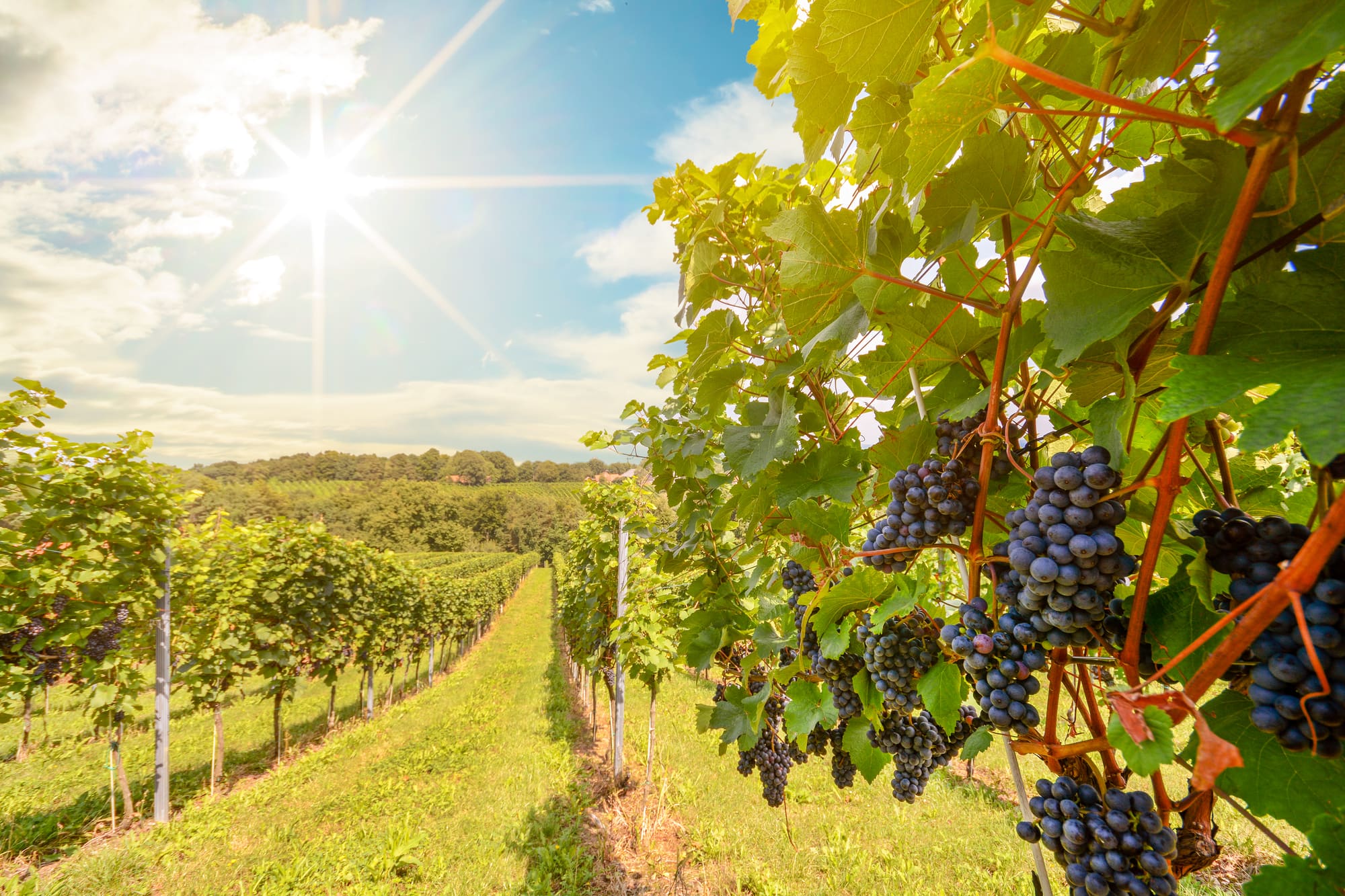
1. Granite soils. The ground is almost entirely weathered granite. Granite holds little water, so vines have to root deeply — giving concentrated grapes and a distinct minerality in the glass. You can literally taste the ground.
2. Altitude. Vineyards sit at 400 to 900 metres, surrounded by the Serra da Estrela (east), Serra do Caramulo (west) and Serra da Lapa (north). This “bowl” of mountains shields the region from Atlantic rain and Mediterranean heatwaves alike. The result: slow ripening and preserved acidity.
3. Day–night temperature swings. By day the granite warms the grapes; at night the air cools quickly at altitude. That difference (sometimes 15–20°C) preserves aromatics that would otherwise burn off — hence the floral notes in Dão reds that warmer regions lack.
The grape varieties
Red varieties:
| Variety | Pronunciation | Character |
|---|---|---|
| Touriga Nacional | “Too-REE-ga Na-syo-NAHL” | Portugal’s queen. Dark fruit, violets and roses, firm tannins that soften with age. |
| Alfrocheiro | “Al-fro-SHAY-roo” | Cherry, spice, fresh finish. Gives Dão blends depth and colour. |
| Jaen | “Zhah-EN” | Known in Spain as Mencía. Fruity, approachable, light structure — good young. |
| Tinta Roriz | “TEEN-ta Ro-REESH” | Spain’s Tempranillo. Adds body and warmth to blends. |
White varieties:
| Variety | Pronunciation | Character |
|---|---|---|
| Encruzado | “En-kroo-ZAH-doo” | The flagship of Dão Branco. Apple, pear, gentle minerality, silky texture. Think white Burgundy, but more delicate and without heavy oak. |
| Malvasia Fina | “Mal-va-ZEE-a FEE-na” | Floral and fresh, lower acidity. Best drunk young. |
| Bical | “BEE-kal” | High acidity, citrus. Gives structure to white blends. |
The best quintas to visit
Quintas (wine estates) in the Dão are almost all family businesses or small producers. That means a personal welcome, real conversations, and tasting from the barrel with the owner beside you — the opposite of a wine theme park.
Always book ahead. Most quintas don’t have fixed opening hours for visitors; tastings are by appointment.
Quinta dos Roques
One of the largest and most visited quintas in the Dão, owned by the same family since the 19th century. They make both classic Dão blends and single-varietal wines (Touriga Nacional, Encruzado). Tastings take place in a restored estate building overlooking the vineyards.
- Location: Abrunhosa-a-Velha, 25 km from Viseu
- Signature wines: Quinta dos Roques Encruzado (white) and Touriga Nacional Reserva (red)
- Website: quintadosroques.pt
Casa de Santar
One of the few quintas with its own museum (on the wine history of the Dão) and a restaurant. Architecturally striking: a neoclassical manor house surrounded by walled gardens. The wines are approachable and fairly priced, making this a logical first stop for newcomers.
- Location: Santar, 20 km from Viseu
- Signature wines: Casa de Santar white and Conde de Santar Reserva (red)
- Tip: combine your visit with lunch in the estate restaurant (€25–40 pp)
Quinta da Pellada
Winemaker Álvaro de Castro is one of the most respected names in Portuguese wine, with regular 90+ scores in international publications such as Decanter and Wine Advocate. The estate is small and personal — visits are the exception rather than the rule, but serious wine lovers should get in touch.
- Location: near Seia, 60 km from Viseu
- Signature wine: Pellada Encruzado (a benchmark for the variety in Portugal)
- Note: no fixed opening hours — contact via the website
Quinta de Lemos
Relatively young but rising fast in the quality rankings, with awards for its red Touriga Nacional. Modern winery, open to visitors during office hours.
- Location: Cortiçada de Lafões, 30 km from Viseu
- Signature wine: Quinta de Lemos Touriga Nacional
Driving the Dão wine route
The official Rota dos Vinhos do Dão is a signposted route through the region. You can drive it yourself; you will need a car, as public transport doesn’t reach the quintas.
Day route: Viseu → wine route → back (about 100 km)
09:00 Leave Viseu for Santar (20 km)
09:45 Casa de Santar — museum tour and tasting (2 hours)
12:00 Lunch at the estate restaurant or in the village of Santar
14:00 Drive to Abrunhosa-a-Velha (25 km)
14:30 Quinta dos Roques — tasting (1.5 hours)
16:30 Drive back to Viseu (35 km, about 40 minutes)
18:00 Aperitif in Viseu’s old town with a bottle you picked up at the quinta
Tip: don’t visit more than two quintas a day. A tasting with conversation takes longer than you think — and someone has to drive. Portugal’s drink-driving limit (0.5 g/l) is lower than in England, Wales and Northern Ireland. Book a local guide or driver if you want to combine several quintas.
Harvest season: when the Dão comes alive
September and October are the best months to visit if you want to see the wine being made. The harvest (vindima) usually starts in the second half of September and runs well into October, depending on the weather.
During the harvest:
- You’ll see the picking teams at work in the vineyards
- The quintas’ cellars are in full production
- You can smell the fermentation on estate tours
- Some quintas offer vindima experiences: join the harvest, tread grapes, have lunch with the team
The Feira do Vinho do Dão (Dão Wine Fair) is held every year in Viseu, usually in early June. It’s the moment to meet and taste a large number of producers in one go.
Buying Dão wine: what to expect
Prices in Portugal
In Portuguese supermarkets (Continente, Pingo Doce, El Corte Inglés) Dão wines start at €5–12. A genuinely interesting bottle from a good quinta costs €12–25. Top cuvées from Quinta da Pellada or Quinta de Lemos cost €35–75 and are hard to find.
How to spot a good bottle
- Look for the DOC Dão seal on the back label
- “Reserva” means a minimum period of oak ageing — more structure, longer life
- “Grande Reserva” is the top tier
- Wines with Touriga Nacional (red) or Encruzado (white) on the label are the safest bet
Bringing wine home to the UK
Wine must go in your hold luggage (liquids over 100 ml aren’t allowed in cabin bags), so pack bottles well or buy a wine carrier. Since Brexit, the UK has personal allowances for alcohol bought in the EU — check the current limits on GOV.UK before you stock up, and watch your airline’s baggage weight limits.
Frequently asked questions about the Dão wine region
What is the difference between Dão and Douro?
Both are major Portuguese wine regions, but very different in character. The Douro (around the valley inland from Porto, famous for port) makes powerful, full-bodied reds with high alcohol and ripe tannins. The Dão makes more elegant, lighter wines with more acidity and finesse — rather like the difference between the Rhône and Burgundy. If you prefer subtlety over power, the Dão is your region.
Can I visit the Dão without a car?
Not really on your own. The quintas are spread over a large area and not served by public transport. From Viseu you can take a taxi or Uber to one or two quintas, but for a full wine-route day you need a car — or book a guided wine tour with a driver, ideal if everyone wants to taste.
How far ahead should I book quinta visits?
In high season (May–June and September–October), ideally two to three weeks ahead, especially for popular estates such as Casa de Santar and Quinta dos Roques. Out of season a week’s notice is usually enough. Email in English — booking by phone works less well with most quintas.
Can I buy Dão wines in the UK?
Yes, but the choice is limited. Independent wine merchants with a good Portuguese section and online specialists are your best bet; supermarkets rarely carry more than one or two Dão wines. The selection is nothing like what you’ll find in Portugal itself — another good reason to bring a few bottles home.
Is the Dão comparable to Burgundy?
Wine writers make the comparison often, and not without reason: both make light-to-medium-bodied reds with earthy complexity and ageing potential, and high-quality whites. But the Dão has its own identity — the granite is distinctive, the grapes are uniquely Portuguese, and prices are three to five times lower than comparable Burgundy. Treat the comparison as a way in, not a definition.
What does a good Dão tasting day cost?
Budget €50–80 per person for a day with two tastings (typically €10–15 per quinta, sometimes waived if you buy), fuel and a simple lunch in the region. Eating at a quinta (Casa de Santar has its own restaurant) adds €25–40. Skip pricey group tours that don’t visit the estates themselves — a tasting at the quinta is always more personal and more rewarding.
Read more: Viseu travel guide · Where to stay in Viseu · Villages around Viseu
Some links are affiliate links: if you book through one, we earn a small commission at no extra cost to you. Prices are indicative — always check when booking.